
Deamidation, not hydrolysis
No peptide bonds are cut, so the protein stays whole and no bitter peptides form.

Protein deamidase · Plant-based drinks and protein foods
An enzyme that converts glutamine on plant proteins to glutamic acid without cutting the protein chain. The proteins carry more charge, so they stay in solution, emulsify better and don't curdle in hot coffee. It goes into the enzyme step you already run.
What it does
soluble protein, from 2.63 to 5.84 mg/mL in a vegan protein powder
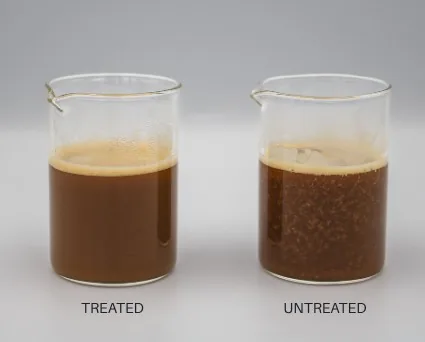
in hot coffee: treated oat milk did not curdle, the untreated control did
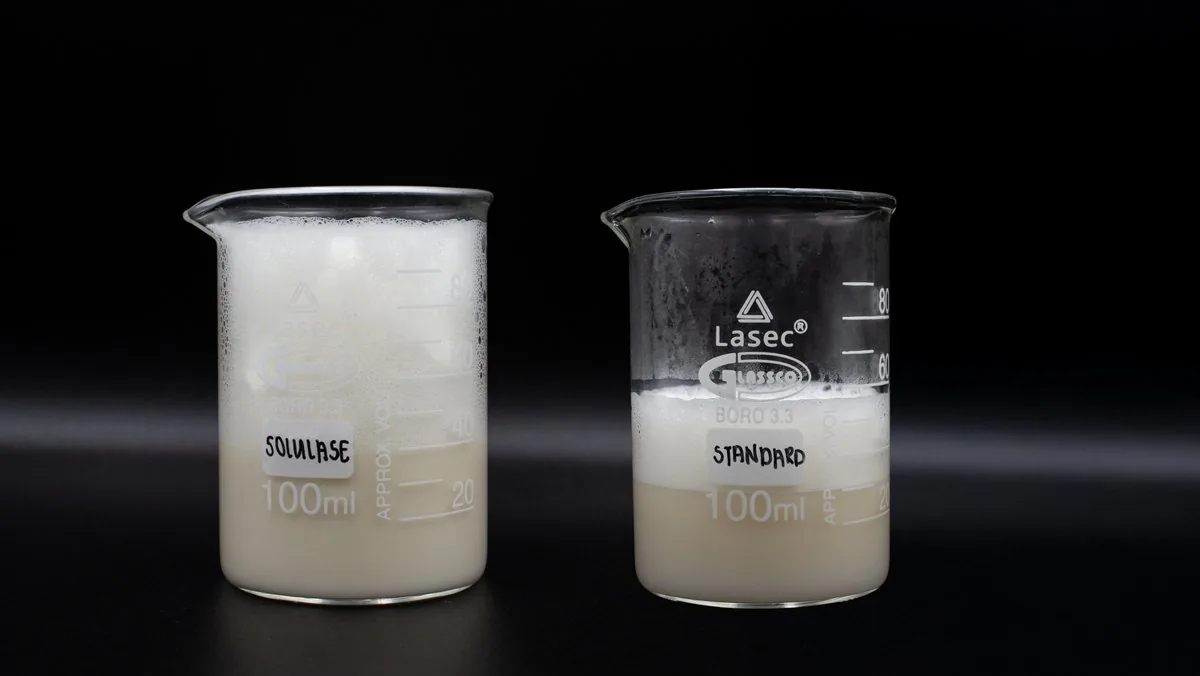
froth formation and foam stability in oat milk
mouthfeel scored higher in a double-blind panel, n = 10
Bench tests on oat milk and a vegan protein powder. Full method and data are in the product data sheet.
How it works
Oat, nut and soy proteins carry plenty of glutamine. Solulase converts it to glutamic acid where it sits on the chain.
No peptide bonds are cut, so the protein stays whole and no bitter peptides form.
Each conversion adds a negative charge. Proteins push each other apart and stay dissolved when hot coffee drops the pH.
A more open, charged protein holds oil droplets and air bubbles better, so emulsions are steadier and froth builds better.
Want the chemistry? See the full explanation in the oat milk guide.
Solulase dosing
A single 1 000 U bottle goes a long way. How far depends on how much glutamine your protein carries, so it varies by base. We confirm your exact dose in a trial on your own material.
How to use it
Mix your raw material and water at your normal ratio.
Solulase works best around pH 5.5. If you run well above that, tell us and we'll set the dose with you.
Dose against raw material weight, never litres. Hold 1 hour at 50 to 60 °C, alongside your other enzymes.
Your standard heat treatment inactivates Solulase. Decant, formulate and fill as usual.
Documentation
Questions
Oat, macadamia, cashew, soy and almond, and plant protein powders. Dose follows how much glutamine the protein carries: one bottle treats about 360 kg of oats, 300 kg of macadamia, 150 kg of cashew, 135 kg of soy or 115 kg of almond.
In a double-blind sensory panel (n = 10), Solulase-treated samples scored smoother in mouthfeel. Because it does not cut peptide bonds, it does not create the bitter peptides that protease treatments can.
It tackles the same problem from a different angle, by making the protein itself more soluble. Whether you can reduce or remove your acidity regulator depends on your base, your oil and your target coffees, so we recommend a trial with your current recipe as the control.
Solulase is used as a processing aid: it works during processing and is inactivated by the heat treatment. Labelling rules for processing aids differ between markets, so confirm with your regulatory team. We supply the documents they need to decide.
Solulase is produced by fermentation with a genetically modified E. coli strain. The enzyme is purified, and residual recombinant DNA tests below 1 ng/g by PCR in both the product and the finished milk.
Yes. Solulase is Kosher certified by the Beth Din and Halaal certified by SANHA. Production is covered by our ISO 22000:2018 certificate (no. 987).
Yes. Solulase works on protein and FiberaseX on starch and fibre. Both go into the same tank, the same incubation and the same heat step.
Tell us your base, your batch size and what you are trying to fix. We send trial bottles with a dosing plan and help you set up the trial arms.

Samples
Tell us your base and batch size. We'll send trial bottles, the QA pack and a dosing plan.